SEARCH
SEARCH
|
For general questions about reservations or event details, please contact the DC Public Library location you are planning to visit. For those in need of disability services related to event registration or room reservation, please reach out to the Center for Accessibility at 202-727-2142 or DCPLaccess@dc.gov. |
Part of the America250 commemoration, join us for Black History Revealed, a full-day, hands-on workshop exploring how African American family histories deepen our understanding of the American story.
As the United States marks the 250th anniversary of its founding, the America250 commemoration invites reflection on the full and complex histories that make up the American story. African American family histories—shaped by enslavement, emancipation, resilience, and community—are essential to that story.
Because most Africans were brought to what became the United States before the American Revolution, America250 offers a powerful opportunity to recognize African Americans as foundational to the nation’s story from its very beginnings.
Black History Revealed: Getting Started with African American Genealogy is a full-day, interactive workshop designed to help participants uncover, reclaim, and preserve African American family histories using proven research strategies and essential genealogical tools.
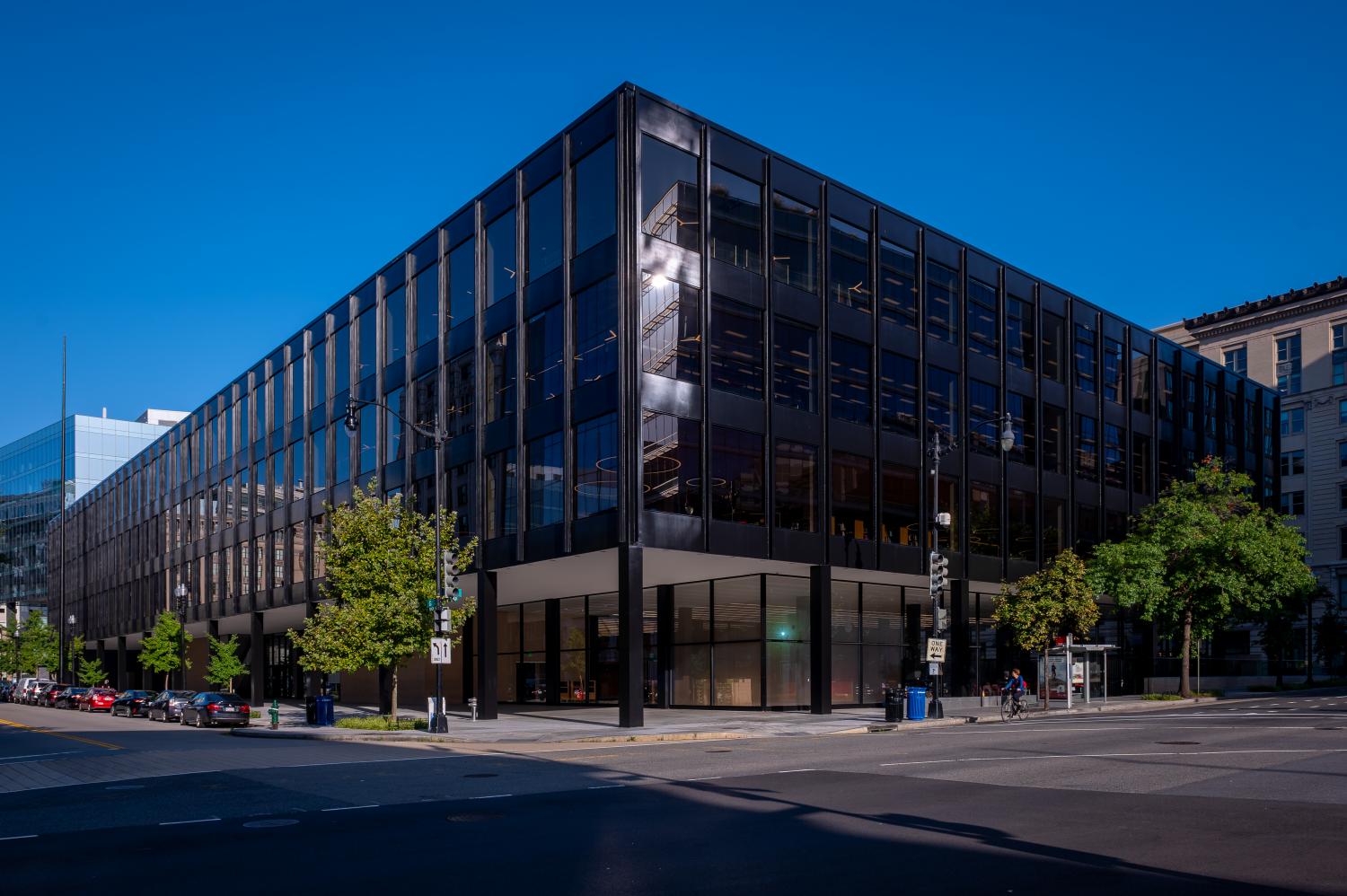
The workshop will begin at 9:30am in the Auditorium at the Martin Luther King, Jr. Memorial Library. There will be a break for lunch from 1pm-2pm. The workshop will then continue at 2pm with specialized breakout sessions in the Conference Center which is located on the fourth floor.
Attendees are welcome to attend any portion of the workshop or stay for the entire day.
BRING YOUR OWN DEVICE: Attendees are strongly encouraged to bring a laptop, tablet, or smartphone on which they normally conduct genealogy research. The afternoon breakout sessions are hands-on and are designed for participants to work directly on their own family research. Please bring your own device along with any family names, dates, locations, or questions you wish to explore. Limited devices may be available on-site, but bringing your own will ensure the best experience.
RSVP is encouraged but not required. Please join us for what promises to be an educational and enlightening day.
The full day schedule with session information and presenters' bio are below.
Morning Session (9:30 AM – 1:00 PM): Foundations & Tools
Welcome & Framing the Day
The workshop opens with a welcome situating African American genealogy within the America250 commemoration, highlighting how family history research connects personal ancestry to broader themes of freedom, citizenship, and belonging in the United States.
Getting Started with Genealogy: Four Steps to Uncovering Your Family History
Participants will learn a clear, step-by-step framework for beginning—or restarting—their genealogy journey, with emphasis on organizing known information, identifying research gaps, and building a sustainable research plan.
10 Essential Tools for Tracing African American Ancestry
This session introduces the most important resources for African American genealogy, including free and subscription-based tools such as FamilySearch and Ancestry, with guidance on how and when to use key records created before, during, and after emancipation.
Lunch Break (1:00 PM – 2:00 PM): Lunch on Your Own Attendees may bring their own lunch, purchase food from Marianne's Cafe located on the first floor of the library, or get lunch at a nearby restaurant.
Afternoon Breakout Workshops (2:00 PM – 4:00 PM): Your Family History Research in Action
The afternoon is designed for hands-on application with a focus on you. Please be sure to bring your own personal device to work on your genealogical research.
Participants will work directly on their own family research in small breakout groups organized by experience level:
Each breakout is facilitated by your workshop leaders who are experienced genealogists, with additional support available to help participants navigate records, evaluate evidence, and develop next steps.
What You’ll Leave With:
In the spirit of America250, this workshop affirms that uncovering African American family histories is both an act of remembrance and a meaningful contribution to understanding America’s past, present, and future.
 Andre Kearns is a native Washingtonian, a nationally respected genealogist, author, and public speaker, and the Founder and CEO of Black Ancestries, a genealogy research and storytelling firm dedicated to helping people of African descent uncover, celebrate, and preserve their family histories. A graduate of Morehouse College and Harvard Business School, Andre brings analytical rigor, historical insight, and compelling narrative to the practice of genealogy.
Over the past two decades, Andre has specialized in African American genealogy, with a particular focus on tracing lineages through slavery, emancipation, and freedom using archival records, DNA evidence, and community-based research methods. His own family research reaches back to the early seventeenth century, including African ancestors present in colonial Virginia prior to the American Revolution—an experience that informs his deep commitment to placing African American families firmly within the nation’s founding history.
Andre serves in leadership roles within national genealogical organizations and regularly presents at libraries, conferences, and cultural institutions across the country. His work has been featured in major media outlets and scholarly journals, and his forthcoming book, Finding Cornerstone Stories: Uncovering Inspiration in Your Family’s History (2026), reflects his belief that genealogy is not only about discovering names and dates, but about restoring visibility, dignity, and belonging to the American story.
 Lisa Fanning, an Indiana native and former DC transplant, is a genealogist, genetic genealogist, and family historian who has spent the past 30 years unraveling the rich tapestry of her family's American history in the south and Midwest. Fueled by a lifelong passion for discovery, her research delves into the histories of enslavement and migration in middle Tennessee, Kentucky, and Georgia. She has also explored her heritage among Tri-Racial Isolate communities in North Carolina, free African American settlements in southern Indiana, and the extraordinary journey of the Anderson family, emancipated in 1712 in Norfolk, VA. Lisa is proud to be the 8th great-granddaughter of Kate Anderson, the matriarch of the Anderson family, who was born in 1670.
Lisa is also a genetic genealogist who volunteers her expertise for groundbreaking initiatives such as the DNA Doe Project, the Tulsa Race Massacre DNA Identification Project, and the DNA Search Squad, using DNA and genealogy research to help identify the unidentified.
She is an elected member of the Board of Directors of the National Genealogical Society and serves on the leadership team of the Midwest African American Genealogy Institute (MAAGI). Lisa has delivered numerous presentations on her family history and contributed as a genealogy consultant for Before the Bulldozers: Historic Southwest D.C. Exposed. She was featured on WOIO Cleveland 19's Unidentified television program and participated as a panelist in a national PBS virtual event for Season Ten of Finding Your Roots with Henry Louis Gates, Jr. Most recently, Lisa spoke at an event during the United Nations Permanent Forum on People of African Descent (UNPFPAD) Fourth Session in New York City and designed a two-day community genealogy workshop for the City of Tulsa, Oklahoma.
Beyond her contributions to genealogy, Lisa is an award-winning artist with a distinguished professional career spanning three decades. She has been a driving force in diversifying the U.S. workforce by building educational and career pathways for underrepresented groups in international affairs, higher education, and healthcare. Lisa holds a B.A. in French and an M.A. in Intercultural Communication, specializing in French language and culture. She is a genealogy/genetic genealogy consultant and serves as the senior Genetic Genealogist for Black Ancestries.
 Tyrone Goodwyn’s mother was a Jacobs. Her family started as Angolan servants on Eastern Shore Virginia in mid-1600s and moved to southeast NC as free people of color by mid-1700s. There, they were Revolutionary War patriots and foundational to free communities along the south and Midwest.
His father’s line hailed from central Virginia, Dinwiddie County. His 2024 research tied father’s grandmother to one of a set of Indigenous American girls who were stolen from South Carolina and enslaved in Dinwiddie around 1700.
Born and raised in Tidewater Virginia, Mr. Goodwyn is a graduate of The College of William and Mary, Old Dominion University, and George Mason University. His degrees are in Marketing, and Information Systems.
Retired from Telecomm IT leadership, he is currently working with Colonial Williamsburg and Custis museums identifying the persons enslaved by the Custis/George Washington/Robert E. Lee family dynasty, from 1600s Eastern Shore to 1800s Mt. Vernon and Washington DC. To further that work, he founded the Gabriel Jacobs EPOCH Initiative in the History department of Old Dominion University, where he directs two history interns.
He is the Vice President of the North Carolina Genealogy Society, and a member of the National Genealogical Society and the Virginia Genealogical Society. He is also a member of the DC and the Hampton Roads chapters of African American Historical & Genealogical Society; and the League of the Descendants of the Enslaved of Mount Vernon.
With his cousins Luke Alexander and Kevin Graham, he speaks across NC and SC on free men of color who created America via Revolutionary War service. Dozens were Jacobs and their kin. Hundreds fought, overall.
 Luke Alexander is a genealogist and community historian focusing on African-American and Indigenous heritage in the Carolinas. He has ancestry from several of the earliest recorded families of African origin in America, along with being of direct descent from the Lumbee, Waccamaw and Cape Fear Native-American nations.
Luke serves as vice-president of the Benjamin and Edith Spaulding Descendants Foundation, Inc. engaged in philanthropic activities in his ancestral hometown Farmers Union, NC. Additionally, Luke currently serves on the Board of Directors of the North Carolina Genealogical Society. Luke is also an inducted member of the Sons of the American Revolution (SAR) with lineage from his 4th great-grandfather William (Loughry) Lowry (1758-1847), a patriot ancestor of the Lumbee and Tuscarora communities of Robeson County, NC.
Luke has provided historical commentary on-air for WECT News, the NBC affiliate in Wilmington, NC. With co-author Andre Kearns, Luke was published in the Afro-American Historical and Genealogical Society (AAHGS) Journal (2020) and the inaugural SOFAFEA Journal (2022) with articles on their shared ancestor Emanuel Cumbo, a free man of Angolan descent who owned land near Jamestown, Virginia circa 1667. Luke is also an administrator of DNA research projects with Family Tree DNA (FTDNA) and GEDmatch.
AGE GROUP: | Seniors | Adults |
EVENT TYPE: | Lecture | Educational Program | Civic Engagement | Black History Month |